
His Work and Its Relevance for Contemporary Practice
By Dirk Marivoet, MSc, PT, PMT, ECP, CCEP
Wilhelm Reich is widely regarded as one of the founding figures of body psychotherapy. His work established a crucial link between psychological processes and their expression in the living body—through breath, muscular tension, and patterns of regulation. This article offers a concise overview of his life, his key contributions, and his ongoing relevance for contemporary somatic psychotherapy.
Early Life and Formation
Wilhelm Reich, born in 1897 in Dobrzanica (then part of the Austro-Hungarian Empire, now in Ukraine), began his medical studies at the University of Vienna in 1918. In 1919, he joined the Sexological Seminary founded by Otto Fenichel.
At the age of 23, he was admitted to the Vienna Psychoanalytic Society after presenting a paper on libido conflicts and delusions in Peer Gynt. He was regarded by Sigmund Freud as one of his most gifted students. In 1922, he became Assistant Doctor at the Vienna University Clinic for Neurology and Psychiatry under Julius Wagner-Jauregg.
From early on, Reich’s work was marked by an effort to move beyond purely symbolic interpretations of the psyche toward a more functional and embodied understanding of human experience.
Reich’s Interest in Sexology and the Principle of Pulsation
Reich’s early work in sexology extended Freud’s libido theory into a functional understanding of orgasmic capacity. At the 8th Congress of the International Psychoanalytic Association in 1924, he proposed that disturbances in orgasmic satisfaction lie at the root of neurotic disorders.
This led to his concept of energetic stasis, in which excitation cannot be fully discharged. Instead of what he described as “calm arousal”—a state of regulated excitation followed by natural release—neurotic functioning oscillates between compulsive over-arousal and diminished vitality.
At the core of Reich’s thinking lies the principle of pulsation—the organism’s capacity to move fluidly between tension, charge, discharge, and relaxation.
Clinically, these patterns are often observed as chronic restrictions in breathing, persistent muscular tension, and a reduced capacity for emotional expression and relational contact.
Within the Core Strokes® approach, this principle is further elaborated through the Energetic Breath Cycle™, where the natural pulsation between charge and discharge is mapped across developmental and relational capacities.
Character Analysis: The Body as History
Clinically, this organization becomes visible in the body—through habitual patterns of breathing, chronic muscular tension, posture, and the modulation of emotional expression and contact. Character is thus not only something one has, but something one is, enacted moment by moment through embodied regulation.
Within the Core Strokes® approach, these insights are further developed through the study of how psychological organization is expressed and maintained through breath, fascia, and posture. This perspective is elaborated in the Fascia Texture Typology™ , where character patterns are understood as living, dynamic processes—continuously shaped and reshaped through experience, rather than fixed psychological structures.
Society, Culture, and the Formation of Character
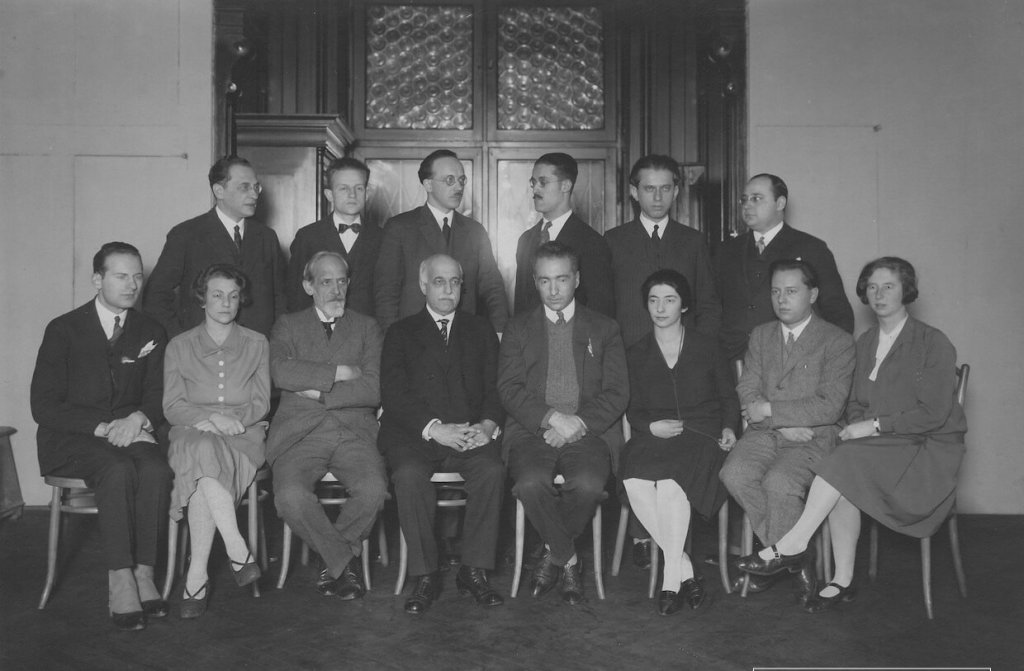
Reich was deeply aware that character formation is not only an individual psychological process, but is shaped by broader cultural and social conditions. Together with Otto Fenichel, he became a leading figure in the more radical, socially engaged wing of psychoanalysis, emphasizing the role of social structures in the development of neurosis.
Reich’s growing commitment to socialism led him to apply Marxist dialectical thinking to the relationship between individual character structure and the collective psychology of society. He explored how personal defenses mirror cultural patterns, and how repression is sustained not only internally, but also through social norms and institutions.
In 1928, Reich was appointed Vice Director of the Vienna Psychoanalytic Polyclinic, where he organized free counseling for individuals who could not afford private analysis. Seeking to extend this work, he founded the Sozialistische Gesellschaft für Sexualberatung und Sexualforschung (Socialist Society for Sexual Counseling and Research) in Vienna, with the support of Sigmund Freud. The center provided sexual education, relationship counseling, and support around pregnancy and reproductive health, reflecting Reich’s conviction that psychological well-being is inseparable from social and sexual conditions.
The work of this initiative was presented at the 4th Congress of the World League for Sexual Reform in Vienna in 1930, marking an important moment in the intersection of psychoanalysis, public health, and social reform.
Reich’s period in Berlin
At the end of 1930, Reich moved to Berlin, where he accepted an invitation from the Berliner Sozialistische Ärztebund to lecture on character analysis. During this period, figures such as Erich Fromm and Karen Horney were influenced by his work.
Reich continued to develop his sex-political perspective, founding the Deutsche Reichsverband für Proletarische Sexualpolitik (German Association for Proletarian Sexual Politics). This movement sought to advance sexual rights, promote life-affirming child-rearing practices, and challenge the social conditions that contribute to repression and neurosis.
Following Adolf Hitler’s appointment as Chancellor on January 30, 1933, Reich began writing Die Massenpsychologie des Faschismus (The Mass Psychology of Fascism), a penetrating critique of authoritarian ideology and its psychological roots. In this work, he analyzed how rigid character structures predispose individuals and groups to submit to oppressive systems—anticipating later theories of the authoritarian personality.
At the same time, the German psychoanalytic establishment increasingly aligned itself with the political climate. The German Psychoanalytic Association pursued a policy of accommodation with the Nazi regime, and institutional pressures mounted against Reich.
By March 1933, Reich could no longer guarantee the safety of himself or his family in Berlin and fled to Copenhagen. In November of that same year, he was formally expelled from the German Psychoanalytic Society, which sought to distance itself from his political stance and theoretical innovations.
Reich’s integration of psychology, sociology, and politics remains highly relevant today. His work offers a framework for understanding how relational environments and cultural conditioning become embodied as patterns of tension, perception, and response—an insight that continues to inform contemporary somatic psychotherapy.
Reich in Scandinavia: From Character to the Body
Copenhagen
In Copenhagen, Wilhelm Reich deepened his work in character analysis by investigating how psychological structure is physiologically anchored in the body. His attention turned increasingly to patterns of breathing and muscular organization, particularly disturbances in respiratory rhythm and chronic alterations in muscle tone.
Reich observed that neurotic character states are consistently accompanied by diaphragmatic restriction and a disruption in the natural alternation between tension and relaxation within what he termed the vegetative nervous system. This marked a decisive step toward understanding character not only as a psychological configuration, but as an embodied process sustained through ongoing somatic regulation.
Together with his Danish collaborators, Reich began to develop the theory and practice of vegetotherapy—an approach that engages the bodily foundations of character resistance through breath, movement, and direct somatic intervention.
His growing emphasis on the body was influenced in part by his second wife, Elsa Lindenberg, who was trained in Laban movement analysis and had studied with Elsa Gindler.
In 1934, at the 13th Congress of the International Psychoanalytic Association in Lucerne, Reich presented these ideas in his paper Psychischer Kontakt und vegetative Strömung (“Psychic Contact and Vegetative Streaming”). However, the congress also marked a turning point: under increasing political pressure, the Association formally expelled Reich.
Oslo
In the autumn of 1935, Reich relocated to Oslo at the invitation of the Scandinavian Psychoanalytic Association and Harald Schjelderup. There, he continued to develop vegetotherapy, laying essential foundations for what would later become known as body psychotherapy
During this period, Reich expanded his inquiry into the biological processes underlying clinical phenomena. In 1935, he began experimental research at the University’s Physiological Laboratory, investigating the bioelectrical aspects of sexuality and anxiety. What he initially described as bioelectricity, he later conceptualized as bioenergy, anticipating broader interdisciplinary explorations of energetic processes in living systems.
In 1936, he founded the Institut für Sexualökonomische Lebensforschung in Oslo, where he conducted further studies on biological and energetic processes in blood and tissues. His work intersected with, and in some respects paralleled, the research of Otto Warburg and Albert Szent-Györgyi.
Reich observed that impaired respiration—particularly reduced oxygenation—was associated with pathological conditions. Extending his clinical insights, he proposed links between diminished respiratory function, emotional inhibition, and sexual repression. Some of these findings, particularly those related to disease processes, remain controversial and are not supported within contemporary biomedical science.
Alongside his scientific investigations, Reich continued his commitment to neurosis prevention and social engagement. He founded the journal Zeitschrift für Politische Psychologie und Sexualökonomie, where he published clinical observations, sociopolitical analyses, and introduced his concept of Arbeitsdemokratie (“work democracy”), emphasizing participation, responsibility, and self-regulation within social systems.
Within the Core Strokes® approach, this lineage is extended through the integration of touch, breath, and relational presence. These principles are further developed in the Neurofascial Transformation Process™, where embodied patterns are approached not as fixed structures, but as living, dynamic processes capable of transformation through awareness and contact
To the United States
Two weeks before the outbreak of World War II, Wilhelm Reich emigrated to the United States, where he took up a position as Assistant Professor at the New School for Social Research in New York.
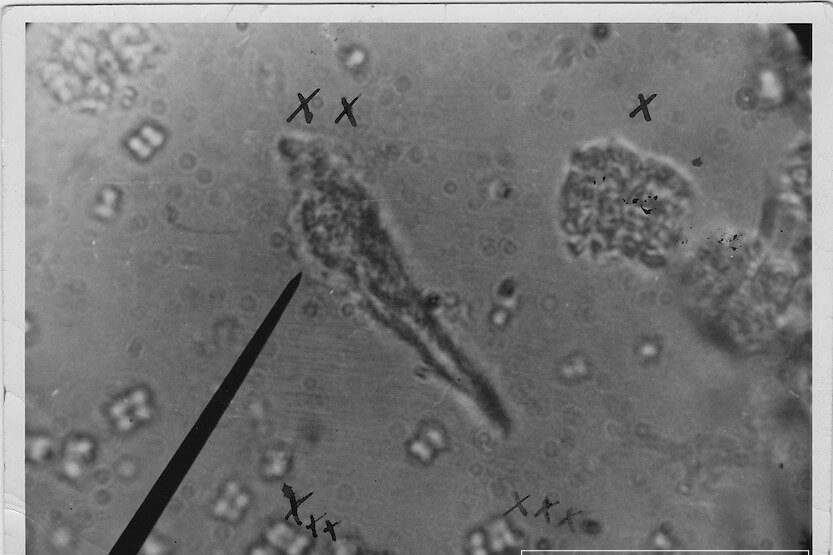
During this period, his work entered a new phase. Reich became increasingly interested in the relationship between biological processes and environmental conditions, particularly the possible interaction between human functioning and atmospheric phenomena.
He conducted a series of independent investigations into electrical charge in the atmosphere, using instruments such as electroscopes and related measuring devices. These experiments led him to hypothesize a connection between atmospheric conditions, weather patterns, and states of physiological and emotional regulation in human beings.
In January 1941, Reich discussed his findings with Albert Einstein. While Einstein acknowledged aspects of Reich’s experimental observations, he ultimately disagreed with Reich’s interpretation of the results.

Reich went on to propose the existence of a fundamental life energy, which he termed orgone. He considered this energy to be present both in the human organism and in the atmosphere. Although parallels can be drawn with traditional concepts such as prana, chi, or mana, Reich’s formulation emerged from his own clinical observations and experimental investigations.
These ideas remain controversial and are not accepted within mainstream science. Nevertheless, they reflect Reich’s persistent effort to develop an integrative understanding of life processes—one that seeks to bridge physiology, psychology, and environment.
His later work also reveals an early ecological sensitivity, including concerns about environmental degradation and the impact of technological developments—issues that have become increasingly relevant in contemporary discourse.
Prevention of the Neuroses: Eye Contact and Skin Contact
Alongside his experimental work, Reich continued to emphasize the importance of prevention in mental health. His focus returned to early development, particularly the quality of contact between caregiver and infant.
He established an Infant Research Center in Maine, where he observed early relational dynamics and their impact on psychological development. Around the same historical period, John Bowlby was formulating what would later become attachment theory.
Reich highlighted the fundamental role of eye contact, skin contact, and emotional attunement in supporting healthy development. He described these processes in terms of alignment, resonance, and energetic exchange—anticipating, in experiential terms, themes that would later be explored in developmental psychology and infant research.

He also investigated the origins of resistance and negation—what he referred to as the “source of the human no”—linking these to disruptions in early bonding and contact. In his view, severe disturbances in early relational organization could contribute to profound psychological fragmentation.
While some of his clinical claims, particularly regarding the treatment of severe psychiatric conditions, remain debated, his emphasis on early relational contact continues to resonate strongly with contemporary perspectives in developmental and somatic psychotherapy.
Clinically, this orientation underscores the importance of early relational regulation—how contact, gaze, and touch shape the organism’s capacity for safety, expression, and connection throughout life.
Opposition and end
Reich’s work consistently challenged established paradigms across the disciplines in which he operated. His attempt to integrate psychology, biology, and energetic processes placed him increasingly at odds with both the psychoanalytic establishment and the medical community.
In the United States, this opposition took a decisive institutional form. The Food and Drug Administration (FDA) issued an injunction against the clinical and experimental use of his methods, particularly those related to what Reich described as orgone energy. His refusal to comply with the court’s order led to a conviction for contempt of court, resulting in a two-year prison sentence.
Reich died of cardiac arrest in November 1957 while incarcerated.
The controversy surrounding his later work has remained significant. While many of his biological and energetic hypotheses are not accepted within mainstream science, his earlier contributions to character analysis and body-oriented psychotherapy continue to exert a lasting influence.
Reich can be understood as both a paradigm breaker and a paradigm maker. His ideas on birth, early development, sexuality, education, and the relationship between individual life and broader ecological and social systems remain strikingly relevant. They continue to challenge contemporary perspectives on what it means to live as an embodied human being.
At a deeper level, his work points toward a unifying principle: that human functioning is organized through rhythmic processes of tension, charge, release, and restoration—patterns that are not only psychological, but fundamentally physiological and relational.
Legacy
The work of Wilhelm Reich opened new horizons across multiple disciplines, including psychiatry, psychoanalysis, sociology, and biology. His thinking consistently crossed boundaries, seeking to understand human functioning as an integrated process of body, psyche, and environment.
Many of his insights were strikingly ahead of their time. Reich anticipated major shifts in attitudes toward sexuality, reproduction, and personal freedom, including the liberalization of laws concerning contraception and homosexuality. He demonstrated how emotional life is expressed through the body, showing that patterns of muscular tension and posture reflect underlying psychological processes—an observation that would later become foundational in body-oriented psychotherapy.
He also emphasized the relationship between emotional life and physical health, contributing to early discussions that would later evolve into psychosomatic medicine. At the same time, some of his later explorations—particularly in the domains of energy research and environmental experimentation—remain controversial and are not supported within mainstream scientific frameworks.
Reich believed that his work was intended for what he called “the children of the future”—those who would be able to carry forward a more integrated understanding of life beyond the constraints of the cultural and scientific paradigms of his time.
Today, his influence can be recognized in a wide range of somatic approaches, including Bioenergetic Analysis, Core Energetics, and integrative methods such as the Core Strokes® approach.
At the heart of his legacy lies a central insight: that psychological health depends on the organism’s capacity for free pulsation between charge and release. This pulsatory movement is not abstract—it is lived through the breath, through the responsiveness of tissue, and through the capacity for relational contact.
Within the Energetic Breath Cycle™, this principle is further articulated as a developmental and clinical map of human experience, linking breath, regulation, and relational capacity into a coherent, experiential framework.
My conclusions
After engaging extensively with Reich’s body of work, it becomes clear that it contains both profound insight and, at times, speculative or problematic formulations. Even his more controversial writings often emerge from a coherent attempt to understand life as an embodied, energetic process.
Reich possessed an exceptional capacity for integrative thinking. While Sigmund Freud laid the foundations for understanding the unconscious, Reich extended this inquiry into the living body—exploring how experience is organized through breath, muscular patterns, and energetic regulation.
In this sense, his work can be seen as an early articulation of what later approaches would more fully develop: that psychological life unfolds through patterns of regulation that are simultaneously somatic, emotional, and relational.
His work repeatedly challenged dominant paradigms, which contributed both to its marginalization and to its enduring relevance. The historical fact that his books were burned—first under the Nazi regime and later by U.S. authorities—reflects the degree to which his ideas were perceived as disruptive.
Today, Reich’s contributions remain an important reference point for many body-oriented psychotherapists and for those seeking a deeper understanding of the relationship between psyche and soma. While not all of his conclusions can be retained without critique, his work continues to invite serious study and reflection.
For anyone interested in the bodymind from a professional perspective, Reich’s writings remain a rich and challenging source of inspiration.