«The wounded soul speaks through the body»
(Anonymous)
When the Body Speaks
Not all pain has a visible cause.
Not all fatigue can be explained by blood tests.
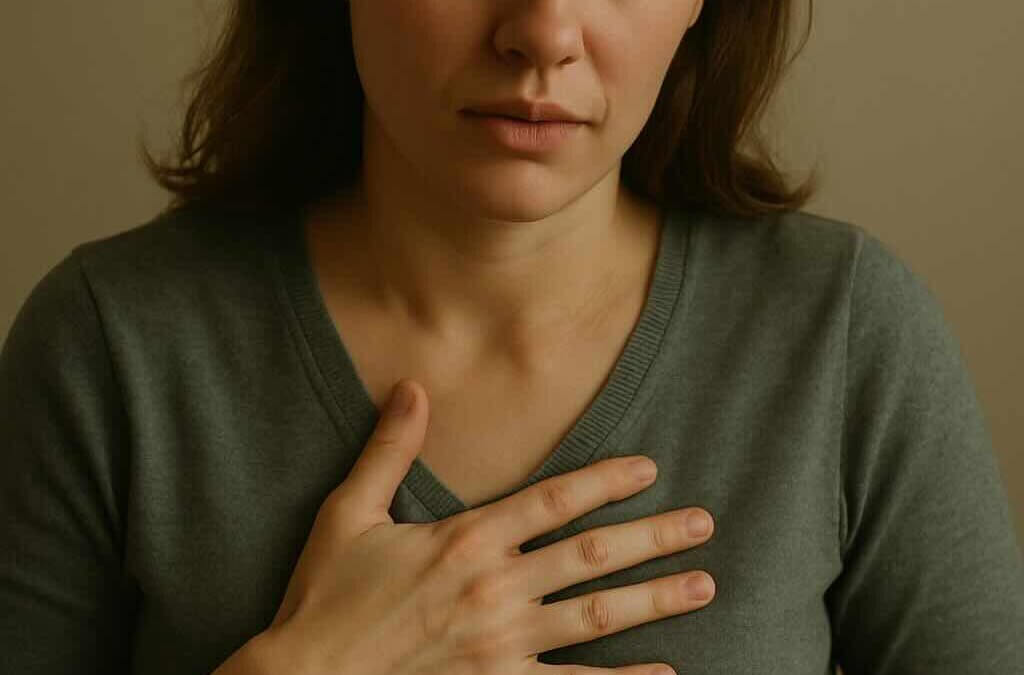
Not all tightness in the chest is heart disease.
Not all shallow breath is due to weak lungs.
Sometimes, the body speaks what the voice cannot express.
Sometimes, the body remembers what the mind cannot recall.
Psychosomatic symptoms are not imaginary.
They are embodied expressions — of unprocessed emotion, unresolved stress, unintegrated trauma, relational wounds.
They are the body’s way of signaling:
“Something needs to be heard. Something needs to move.”
What Are Psychosomatic Complaints?
When the balance between:
- physical stress
- emotional stress
- relational dynamics
- environmental demands
…becomes overwhelmed — the body can no longer regulate.
- Tension accumulates.
- Flow is blocked.
- Symptoms appear.
Often:
- The connection between experience and symptom is not immediately clear.
- Medical tests are inconclusive.
- The person feels misunderstood → “nothing is wrong” → yet the body knows otherwise.
In Core Strokes® and the Neurofascial Transformation Process™, we understand psychosomatic symptoms as:
- Neurofascial Encoding™ → unintegrated survival patterns stored in fascia
- Distortions in the Energetic Breath Cycle™ → blocked pulsation
- Chronic autonomic dysregulation → sympathetic overdrive, dorsal collapse, or freeze
- Fascia → armored, dense, fragmented
- Breath → shallow, held, fragmented
- Relational field → withdrawal, mistrust, hypervigilance
Common Manifestations
Physical symptoms
- Chronic fatigue
- Inability to relax
- Chest tightness, palpitations
- Unexplained muscle/joint pain
- Shortness of breath
- Headaches, neck, back, pelvic pain
- Digestive discomfort — stomach, intestines, abdominal pain
Emotional and behavioral symptoms
- Listlessness, low energy
- Sleep disturbances
- Anxiety, insecurity
- Poor concentration
- Low mood, worry
- Irritability, agitation
- Loss of pleasure
- Sexual dysfunction → hypo or hypersexuality
- Compulsive eating, alcohol use, smoking, medication overuse
In short: the bodymind is out of pulsation → out of balance.
How Psychosomatic Patterns Develop
Often, beneath psychosomatic patterns lie:
- Chronic relational stress
- Developmental trauma
- Attachment wounds → unintegrated grief, shame, fear
- Emotional suppression
- Lack of safe co-regulation → nervous system remains defensive
Over time:
- Breath pattern shifts → phases of Energetic Breath Cycle™ become blocked
- Fascia encodes survival-based tension → Neurofascial Encoding™
- Autonomic system loses flexibility → chronic fight/flight/freeze
- The body carries what could not be felt, expressed, or resolved
Examples of Psychosomatic Dynamics
- Chest pain can sometimes reflect grief that was never expressed or mourned, often leading to a collapsed and restricted breathing pattern.
- Neck and shoulder tension may signal unresolved anger or frustration, which can show up as a conflicted and uneven breath.
- Abdominal symptoms — such as tightness, discomfort, or digestive issues — are often connected to unprocessed fear or shame, resulting in a disconnected and fragmented breath.
- Chronic fatigue frequently accompanies a state of deep shutdown or freeze in the nervous system, where the natural rhythm of restful surrender in the breath becomes blocked.
- Pelvic tension often holds inhibited life force and unresolved sexual or relational wounding, limiting the natural flow of vital, expressive breath.
Why Body-Centered Work is Essential
Talk alone does not release what is encoded in:
- Body memory
- Fascia
- Breath
- Autonomic nervous system
Psychosomatic healing requires:
- Restoring Energetic Breath Cycle™ → reestablishing pulsation
- Releasing Neurofascial Encoding™ → freeing the body from survival contraction
- Restoring relational trust → repairing the capacity for co-regulation
- Building interoceptive awareness → safe contact with bodily sensation
In Core Strokes® and the Neurofascial Transformation Process™, we support the body in remembering how to:
- Breathe fully
- Move freely
- Feel safely
- Relate openly
- Rest deeply
Therapeutic Pathways
Individual Therapy
- Explore embodied roots of psychosomatic symptoms
- Restore flow in breath and fascia
- Reintegrate trauma-encoded patterns
- Rebuild autonomic flexibility
- Address attachment dynamics beneath the symptoms
Body Awareness, Breathwork, Grounding
- Restore full Energetic Breath Cycle™
- Soften fascial holding
- Build capacity for safe, grounded embodiment
- Support emotional digestion through bodymind awareness
Relational and Family Therapy
- Address relational field dynamics contributing to symptoms
- Repair ruptures of co-regulation in close relationships
Group Therapy
- Practice relational presence
- Witness and integrate shared psychosomatic patterns
- Restore trust in shared human experience
The Path of Re-integration
Psychosomatic symptoms are not the enemy.
They are signals — invitations to:
- Slow down
- Listen
- Breathe
- Feel
- Restore flow and trust in life
Through Core Strokes®, Neurofascial Transformation Process™, and integrative bodymind work, clients can:
- Release symptoms rooted in unresolved survival responses
- Restore autonomic resilience
- Rebuild a trusting, vital relationship with their own body
- Move beyond symptom management → into deep embodied healing
As breath returns, fascia softens, the bodymind remembers its rhythm — symptoms can dissolve, and life can flow again.